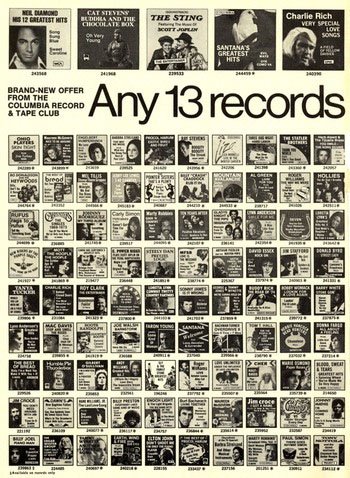
 My jones for more, more, more music was lit early and has yet to wane. It started with a Kool And The Gang 45 when I was nine, picked up ferocious speed the day I got my paper route at 13, and has totally overwhelmed me in the digital age. If I use drug metaphors to describe my relationship with acquiring music, that is because what I am describing is addiction. I am not alone.
At least that’s what Columbia House Record Club bet the farm on way back when. Anyone close to my age knows exactly what Columbia House was. In the 70s and 80s the magazine ads were ubiquitous: “12 Records Free” and then something about how you need do nothing else…but let the (wretched) Album Of The Month arrive at retail + $5, and some other fine print that read like a mortgage document.
The Columbia House business model took a page from the anti-drug speeches we listened to in school. They would “front” you the free stuff up front, and then slam you with outrageous commitments you had no idea you signed up for. As far as I know, there was no age limitation for sign up either. Practically every parent who raised a child in the 60s, 70, or 80s has penned an irate letter to Columbia House. I remember at least three times I re-uped with them, defaulting on my obligation each time.
The result is that I have a huge number of Greatest Hits compilations in my vinyl collection, many of which I would never have purchased had I been paying “real” money. They never had the good stuff at Columbia House, for some reason. It was always the Dylan album that sucked from 1972 or a perfectly awful Aerosmith live record. What it did do is obvious to anyone who has taken a look at the shelves in my living room, or at the external hard drive(s) I cart around: it made my appetite for more music, more tweaks to my dopamine receptors, insatiable. So, thank you, Columbia House, I guess.
 liveoakblues
 Live Oak Blues