Author Archive

Doc Watson And My Grandfather

When my grandfather came back from WW2, he bought a Gibson L-7 and became the best Travis-Atkins style guitarist I have ever seen. In a series of events that would claim a blog post of its own, that guitar now sits in my closet, dried rattlesnake rattles resting against the unparalleled Gibson craftsmanship inside its hollow body. The best part of our regular visits to South Carolina farm country involved all of us sitting around to watch him play this guitar. On a good day, my great grandmother would  accompany him on autoharp and the rest of the family would kick in with improvised vocal harmonies. For me, this was the musical equivalent of writing in wet cement, and goes a long way toward explaining my obsession with music.

The incomparable Doc Watson passed this week. Blind, both proud and humble, he was the best flatpicking guitarist ANYONE has ever seen. Doc was rooted firmly in the hills of North Carolina, not too far from where my grandfather, his contemporary, plied his skills on the local gospel circuit. So this music (Doc, Earl, Merle, Chet, Bill) has always felt like home to me, because in my small way I participated in it. About 5 years ago, I found a number of acetates my grandfather made in the 1940s and 50s. The lacquer was peeling off and many were unplayable. On them I found full and partial songs, radio takes, and the sound of my family years before I was born singing and playing together. What I did manage to salvage, I recorded, cleaned up, and dubbed onto CDs.

Like Doc Watson, everyone on those CDs is now gone and, honestly, I don’t know if our generations have come anywhere close to carrying on their legacy. I do know that since my grandfather died in 1997, the only family gatherings we have had are funerals and, although my brother and I consider ourselves musicians, neither of us have ever played with the younger generations at our feet, freshly bathed and sitting transfixed in their pajamas

Please join me tomorrow for “Left Of The Dial” from 1 to 3 Eastern on Grow Radio as I honor the music of Doc Watson and others.

1979

…was the year I learned to hate Disco, a fortunately short-lived phase that I now know to be the result of cultural trends having their way with me without any critical thinking on my part. As soon as I saw my first “Disco Sucks” t-shirt in Creem magazine, I knew that the disco 12-inchers and 45s had taken their last spin on my Panasonic turntable…or so I thought.

See, like any year (arbitrary time markers, at best), 1979 was a pivotal one. Disco and funk were trending down, and punk and New Wave were trending way up in the US, while punk itself had already reached its sell-by date in the UK. Yet 1979 was THE year for Post-Punk in the UK. See how that works? Mark any date and any given cultural trend is either ascendant or descendant. That’s why it is so much bullshit to say “Music sucked in the 70s.” Because it did not suck, not by a long shot.

1979 was the most important year in my musical life. I was playing the guitar at least 4-5 hours a day, learning every Stones lick (incorrectly, I later found out), and buying more records than I ever had before or ever have since. I had discovered the Clash, the Ramones, Graham Parker, had seen the B-52’s, the Who, and the Ramones live…at the same time that I was still nursing a heavy metal jones that was, for the most part, misguided.

Help me revisit this crucial year tomorrow (Sunday, 2-26) on my show, “Left Of The Dial” from 1-3 Eastern on http://www.growradio.org.

Columbia House

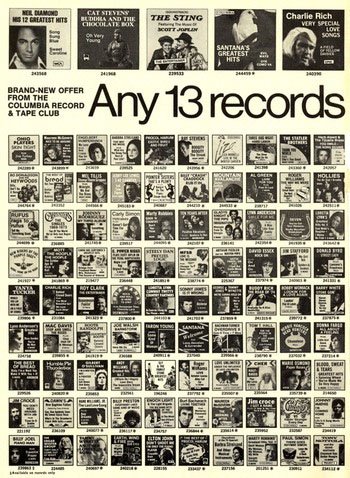
My jones for more, more, more music was lit early and has yet to wane. It started with a Kool And The Gang 45 when I was nine, picked up ferocious speed the day I got my paper route at 13, and has totally overwhelmed me in the digital age. If I use drug metaphors to describe my relationship with acquiring music, that is because what I am describing is addiction. I am not alone.

At least that’s what Columbia House Record Club bet the farm on way back when. Anyone close to my age knows exactly what Columbia House was. In the 70s and 80s the magazine ads were ubiquitous: “12 Records Free” and then something about how you need do nothing else…but let the (wretched) Album Of The Month arrive at retail + $5, and some other fine print that read like a mortgage document.

The Columbia House business model took a page from the anti-drug speeches we listened to in school. They would “front” you the free stuff up front, and then slam you with outrageous commitments you had no idea you signed up for. As far as I know, there was no age limitation for sign up either. Practically every parent who raised a child in the 60s, 70, or 80s has penned an irate letter to Columbia House. I remember at least three times I re-uped with them, defaulting on my obligation each time.

The result is that I have a huge number of Greatest Hits compilations in my vinyl collection, many of which I would never have purchased had I been paying “real” money. They never had the good stuff at Columbia House, for some reason. It was always the Dylan album that sucked from 1972 or a perfectly awful Aerosmith live record. What it did do is obvious to anyone who has taken a look at the shelves in my living room, or at the external hard drive(s) I cart around: it made my appetite for more music, more tweaks to my dopamine receptors, insatiable. So, thank you, Columbia House, I guess.

January 12, 2010

In Port Au Prince one afternoon, I passed a naked man bathing in the water of an open sewer. In the logic that possesses you once you’ve been there for a day or two, it made sense to me that he would make use of the only running water around. I marveled at his resourcefulness. Only later, when I was safe inside the building where I worked, was I able to absorb the reality of what I saw, maybe not even then.

It is now almost a year since I first went to Haiti, and I experience similar lapses of mind about it even today. Most of the time I forget I was even there, and then a story about an uprising or a corruption scandal will pop up in my feed and I am sucked right back. Today it was the posting by a friend of a cartoon written by Pharés Jerome and drawn by Chevelin Pierre. The writing is basic reportage, but the images are more accurate and evocative than most photographs of the place. I’ve walked down these same streets, past these same tents, felt this same wind coming down the mountains.

Today is the 2nd anniversary of the earthquake, an event that remained distant and Other until I became acquainted with many of the people who survived it somehow. How Jean-Pierre, with the huge laugh and Clark Gable moustache, had to walk over bodies and limbs for miles to pull his wife out of a collapsed office building. Or how Stéphane managed to still come to work the day after he lost his mother and father. Or even Leon, safe somehow up in his villa, who barely felt a thing and saw it on the news before he saw any damage. No such luck down in the heat of Port Au Prince. By the time I got there a month later, the kind of recovery that only a Haitian can know had begun. I realized then, and remember now, that I know nothing about what survival means. That’s good to remember.

Why Actor Bands Will Always Suck

For the purposes of this post, I have subjected myself to music by the following people: Keanu Reeves, Jared Leto, Zooey Deschanel, Bill Paxton, Sylvester & Frank Stallone, Eddie Murphy, Jamie Foxx, Billy Bob Thornton, Kevin Bacon, Lindsay Lohan, Bruce Willis, Steven Seagal, Juliette Lewis, and Scarlett Johansson. Oh, the lengths I will go. Hollywood is the most insular place on the planet…so much so that despite the embarrassment of virtually every other movie star that has gone before them, nothing seems to stop the next star from thinking he or she will be the first to release a legit rock and roll record. But it will never, ever happen. Here’s why.

Brand Management

Every single movie star you see is the result of meticulous and relentless branding. You think you’re the first person to enjoy Morgan Freeman’s paternal warmth? Zooey Deschanel’s “quirky” sexiness? Owen Wilson nasal drawl and lovable smartassitude? Nope. Those personas were designed in a bungalow conference room and supported by countless tweaks and decisions. By all rights, every movie star should be branded with a TM tramp stamp. Conversely, no real rock and roll band was formed in a conference room. And those that were simply suck. Every single time.


Hunger

Go watch “Control” (2007), a film about the life and death of Joy Division. This is the environment in which great bands are formed. They are hungry, underemployed, desperate, and in their brief existence, Joy Division never recorded a song that was less than great. The Clash, The Rolling Stones, The Velvet Underground, Black Flag, hell, even the Beatles all began in deprivation: the whole band living in the same flat, playing music 18 hours a day, eating and sleeping whenever those human necessities were available. No great band has ever been formed from the 1%…and most bands get worse as they get richer.

You Can’t Trademark Credibility

Movie stars believe their stardom gives them a pass for any other artistic endeavor they may want to pursue. This delusion is as old as Hollywood itself: see Tony Curtis’s paintings and Jimmy Stewart’s “poetry” for examples. Others attempt to buy credibility by latching on to an already proven artist. Scarlett Johansson recorded an album of Tom Waits songs. (I’m not kidding. She really did.) Zooey Deschanel has teamed with credible musician M. Ward to form She & Him, only to have their Christmas album (!) included on the list of the Worst Albums of 2011 by popmatters.com. The fact that Deschanel’s schtick has been outed as that of the latest Manic Pixie Dream Girl does not help her cause.

What Can A Movie Star Do Then?

Nothing. It won’t work. Ever. Comfort is the enemy of rock and roll. If you are a movie star, thank God, Ron Hubbard, or the Flying Spaghetti Monster that you hit the lottery and leave music to the people who know how to make it.

The Rock & Roll Hall Of Fame

I gave the Rock & Roll Hall of Fame the benefit of the doubt until 2008: the year they inducted Madonna. I’d been to the (rather stunning) museum in Cleveland and still, as much as I am embarrassed to admit it, held out hope. But then they let her in–before Tom Waits or The Stooges or Dr. John or KISS or The New York Dolls or a hundred others who were actual rock and roll musicians.

Certainly going after the RRHOF is easy pickings, and there is no shortage of critiques of the institution. Most of these involve some variation on the “Jann Wenner Sucks” motif, and to be sure, Wenner is a legitimately loathsome individual who chooses inductees like he chooses Rolling Stone magazine covers. The other argument–that something as raw as rock and roll should never be institutionalized–doesn’t carry much weight with me. We’ve been ranking our favorite artists since the beginning of music, and if done right, an institution like this could be a valuable tool for defining our musical culture.

No, what bothers me about the RRHOF is that they don’t seem to have anyone on the “committee” that actually knows anything about rock and roll. The list of inductees reads like the playlist at a classic rock radio station, and a boring one at that. Punk is woefully under-represented, hip hop is all but completely absent, and forget about such bands as Sonic Youth, Billy Bragg, The Fugs, The Fall, or Nick Cave. So the RRHOF has long since squandered any credibility they may have started with. If you don’t believe me, say hello to its newest members: Guns N’ Roses and the Red Hot Chili Peppers.

Otter Creek

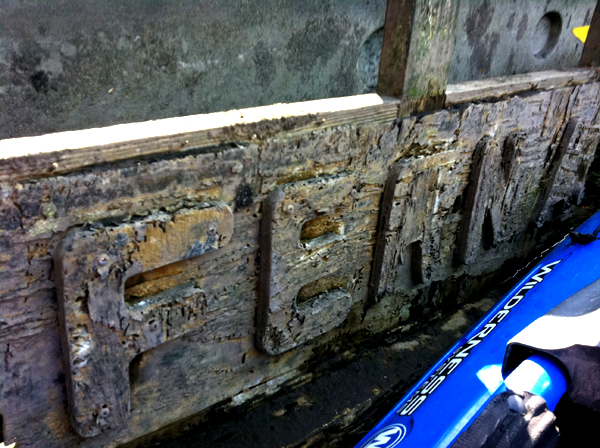
I get the impression they don’t appreciate folks with “college boy” glasses paddling boats without motors at Otter Creek (given the jibes about not going above idle speed and the unanswered questions about what kind of fish they were catching) but I’ve grown used to it. The payoff was two hours of solitude, clear water, and perfect kayak weather. Some of my coworkers complain about having to live in Florida (expats from Colorado), and I only wish I could have taken them down Otter Creek on a brilliant Sunday afternoon to show them my Florida.

The first stop was an abandoned fishing trawler that would have made a perfect clubhouse for the 14-year-old that lives inside of me. I love all things abandoned: buildings, towns, boats. I like to imagine all that went on inside them and what led to their abandonment. Further on, the leopard-spotted gar were abundant, but no gators, as the water was almost numbing. The dead fawn floating just under the surface was another clue that they had headed to warmer ground.

It was great to be back in the saddle again and we made it back with just enough strength to rack the boats and head to a well-deserved meal. There are few things more visually sad than a kayak in the backyard gathering spider webs. That is one abandoned boat I do not like to see.

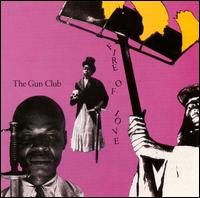
The Gun Club, “Fire Of Love” (1981)

Records That Changed Me

Back in the sweet, pre-reality days of college, within the insular music crowd I was an honorary member of, records got passed around like the cultural totems they are. I learned about “Double Nickels On The Dime” this way, ditto “Berlin.” The record that left a mark more indelible than any of the others was The Gun Club’s “Fire Of Love.” I could hold forth on why this is an important record, that it was the first to crossbreed punk with the blues, that it quickly achieved that state of perpetual newness that all great records have, but really all one needs to know is that it is just as dangerous a record as the day it was released.

There is something feral and unstable about Jeffrey Lee Pierce’s vocals (his lyrics, too, for that matter), and from the opening jugga, jugga of “Sex Beat” to the razor-blade slide of “Preaching The Blues” to the overdriven treble of “She’s Like Heroin To Me,” the guitars are just as crazed and unpredictable. Check out the record’s centerpiece, “For The Love Of Ivy,” a 5:37 trip inside a mind flying back and forth over the edge of madness, musically and lyrically.  Stopping, starting, whispering, screaming. You can almost see someone looking at the wreck his life has become in the mirror and claiming, almost nonchalantly, “you look just like an Elvis from hell” before launching into manic exploration of the limits of musical dynamics.

I walked in the studio a few weeks ago to do my internet radio show, and the DJ who has the show ahead of mine had “Ivy” on the turntable. By my calculations, he was born a good six years after “Fire Of Love” came out. He looked at me, many years his senior, and we both said “hell yeah” at the same time. Anyone who has had this record tattooed on their consciousness knows what that recognition means. “Fire Of Love” is nothing less than a monument. That you cannot find it on the “Rolling Stone’s 500 Greatest Albums Of All Time” is yet another reason why that list is useless.

Ernie Tales

I’d like to introduce you to Ernie. He’s a CorgieJack (or RussCorg), stands about ankle high, and has breath that can strip paint. He’s 14 years old, but can still outrun me on my best day, and makes it his mission to beat me to the back door to do his business. Ernie is The Family Dog: he lived the first third of his life with my brother Thomas (when virtually all his near-death scenarios occurred), the next third with my Mom and Dad, and has bestowed upon me the privilege of spending his final third with me. Make no mistake: although he lives here, he belongs to the whole family.

That he has even made it this far is a miracle. He has endured falling off a boat in the Chesapeake Bay (unbeknownst to the pilot until 15 minutes later), sinking with that same boat a year later, and a vicious attack by a Rottweiler (Ernie has no idea that he is a “small dog”). After he fell off the boat, he simply kept swimming toward it until my brother noticed, turned around, and found him. You see, Ernie wants nothing more than to spend every waking moment by your side.

Coming home from work, letting him back in from outside, it doesn’t matter. Ernie is just as excited to see you again. His whole body wiggles and he dances until you pet him. If you forget, he’ll tell you about it in this half-spoken, muted howl. And when you do pet him, all is well in his world. When my beloved Waldo died, Ernie went into a two-day depression. He does not take his relationships lightly. He is everything I aspire to be.

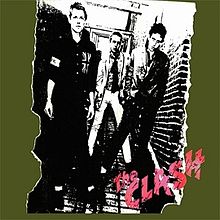
The Clash, “The Clash” (1977)

Records That Changed Me

During the summer of 1983, I spent many hours sweating it out in a busted, brown Chevette with no AC and a driver’s-side door that didn’t work–mostly back and forth to my job down at the beach. My car’s $49.95 Radio Shack cassette player saw only two tapes the whole summer: a reggae mix and the Clash’s first record, and the Clash took up 90% of that. I defy anyone to show me an album with a higher hangover-to-work ratio.

Through the tricks of chronology, and because I lived in the United States, I was exposed to “London Calling” (The Greatest Rock & Roll Album Ever Recorded) before this one. But when I finally did hear it, I felt shot out of a cannon. Immediately. Seriously, go put on “Clash City Rockers” (the 1st song) and see what I mean. Then move over to “Complete Control” and pay attention to what it does to your body (I just listened to it again for the millionth time: adrenaline and goosebumps…again). I have to listen to the original “I Fought The Law” to remember what it sounds like because the Clash so completely made the song their own, and words fail me when I try to describe why the masterful “(White Man) In Hammersmith Palais” may be the greatest song they ever recorded.

As a hobbyist radio DJ, I listen to hours of new music every week, and I have yet to hear anything as fresh as what the Clash produced 34 years ago. Although I became disenchanted during the “Combat Rock” era, my admiration and gratitude has only grown over the years. For someone who hates when people overmourn public figures, I actually wept when Joe Strummer died. “The Clash” made want to see the world, to see past the USA with which I had become so bored. I outgrew that boredom (in part, because I actually did go see the world), but I can access that original charge every time I listen to this record.