Author Archive

Urban Kayaking

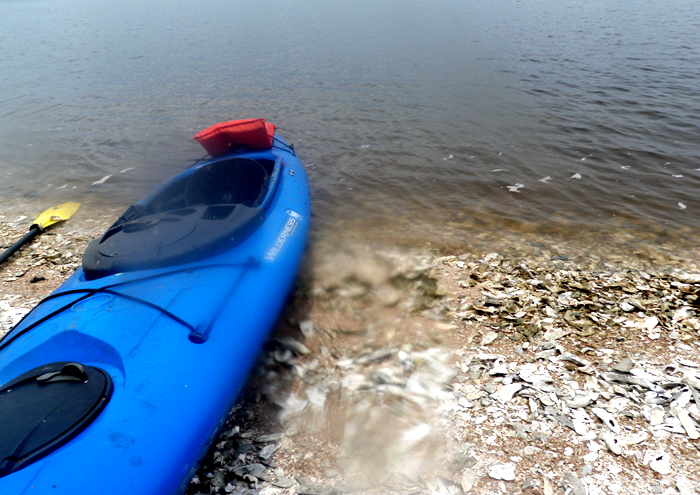
I know I make a big deal out of the blessed solitude of kayaking, but in truth I love nothing more than kayaking with someone else, especially if that someone is one of those No-Time-Has-Passed friends. Couple this with something I have never done, like kayaking in downtown Richmond, and some rocks and whitewater, and I am in heaven. I left a good bit of precious blue plastic on the rocks (nothing like watching pieces of your kayak float downstream in front of you) but that was a small price to pay for this amazing crawl through the James River–a place where I swam and swallowed gallons of water as a child. I didn’t swallow any this time around, but I did take some in the boat. Progress.

The Kurt Cobain Effect

This post is not really about Amy Winehouse–may that tortured soul finally rest in peace–but about how folks are responding to her death. As happens with such events, however expected they may be, Amy fans are coming out of the woodwork. Her voice was a powerful thing, the songs interesting, her early death awful and, one would think, tragically avoidable. And I think it’s that last bit that’s made her fans far more vocal postmortem than when she was still alive.

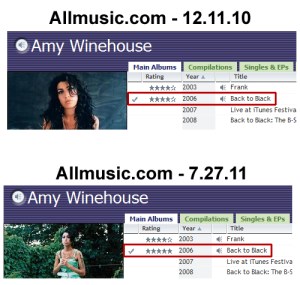
None more so than the folks at Allmusic. As the graphic to the left indicates (and thanks to Wayback Machine), on December 11, 2010, Allmusic judged Winehouse’s last record, “Back To Black,” to be a very respectable 4 stars. After her death, that record received an extra star. Why? I put the question to them and got back a form response claiming that “star ratings actually can change over time.” Yes, but of course that is not the point. She got upgraded only after her death. I knew they would do that and that’s why I checked.

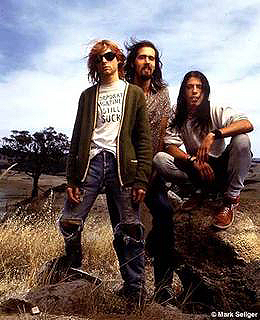
I call this the “Kurt Cobain Effect,” because nowhere was this tendency more obvious than after his death. I well remember Nirvana before he died. They were popular, rebellious as any chart-topping band could be, but certainly nothing new (see the Melvins, Smashing Pumpkins, and Soul Asylum–all of whom did the “return to slow metal” thang before Nirvana did.)  People loved them, but not out of all proportion.

Until Kurt killed himself. Then the accolades tumbled down like so many gold pieces, Rolling Stone the most sycophantic of them all. According to them, Kurt Cobain (not Nirvana) was the Artist Of The Decade (1990s) and the 12th Greatest Guitarist of All Time (wait…what?). He was a damn good songwriter, fun to watch, but no one, not even Jann Wenner, would have called him these things while he was alive. Dying so tragically, so romantically, did that. Ironically, of course, he would have despised this kind of corporate attention. Oh, and Allmusic gives 5 stars to Nirvana’s last three albums, a distinction that very few artists have.
This is nothing new. How else could one explain how mediocre-at-best actors such as James Dean and Marilyn Monroe are revered today far beyond their output? Why them? Why Cobain? Why, when the Great Joe Strummer died (nothing less than a god in the music universe) was there barely a peep? But that is a topic for another post. Amy Winehouse’s music was good enough to stand on its own. I hope that people allow it to.

Can Someone Please Explain Dubstep To Me?

I remember the night the venerable Hugh Downs (!) did a news story on the Sex Pistols. I was watching with my parents. My mother was appalled, my father silent, and I was so excited I could barely contain myself. One look at my mother’s face and I knew there was no way to close the gap, to get her to understand that this band had done the impossible: it had cleared my palate of Journey, REO Speedwagon, Styx, and all the wretched bands that infected Virginia Beach radio in the 70s and 80s.

So given that I am older now, but not so out of touch as some of you might think, could one of you please explain dubstep to me? What is the appeal? Is the only forum for it a sweat-and-ecstacy-soaked dance club? Do people like it because they think other hip folk like it? I ask, because I think it sucks. And believe me I’ve tried to like it. I’ve hit up YouTube, Turntable.fm, and various other forums to see if there was something I was missing, because I am nothing if not open-minded when it comes to music.

Or is it simply a matter of my old ears, as brilliantly illustrated by the instant classic South Park episode where the hip new music trend sounds like literal shit to Stan? Because it does. It sounds like unmelodic, pan-rattling, unoriginal, caterwalling shit to me. I welcome your enlightenment, good reader.

Scallopin’

With all due respect to Kansas, North Dakota, and Delaware, Florida is the type of state that residents want to experience. Many hours have I spent with the Delorme Florida Atlas & Gazetteer wanting to go there and there and there. Well, I got to experience Page 76 on Sunday, which is several miles out in the Gulf Of Mexico in 4-to-6 feet of water, chasing cute, blue-eyed, snapping mollusks also known as scallops.

Everyone who does this between July 1st and September 15th every year (and there are plenty) fixates on getting their limit of scallops. But the real payoff is the world of eel grass, coral, manta rays, fluorescent fish, sea anemones, and creatures that stretch out long, thin, electric blue tentacles and then suck them back in when you touch them. I could have floated for hours without surfacing, but the current would have put me miles away from my only link back to shore. So what if I refused all sunscreen and returned with a face a hue of red you can’t find it on a color map? My “reasoning”: pirates never used sunscreen. Seriously, that’s what I thought.

After shucking these guys, I ended up with a handful of actual scallop meat, but there’s nothing quite like bringing food back to the cave, especially when you have someone who knows how to cook it. And, yes, I felt sorry for them. On the boat, as they sat in the bucket of water we used to collect them, they would occasionally go into a snapping frenzy to escape. Adorable, and delicious.

Great Song, Shite Artist

I was sitting with my lady love at a local eatery when an old Rod Stewart song came on the radio, and it was so good I set my sammich on my plate to listen. I then uttered the predetermined thing that most folks do at such times: “God, does he suck now.” Thus the birth of an idea: a radio show, two hours of songs that I like in spite of the artists’ assholery, pomposity, questionable career choices, or all-around wretchedness.

This could turn out badly, defending myself against attacks from those who hate the artists as much or more than I do or, worse, against those who are offended that I would lump their idols in the “bad artist” category. So a few parameters are in order. Although I will try to include artists who are self-evidently loathsome, not all will be. These will be folks I just don’t like for whatever reason, which may or may not have anything to do with their artistry. Also, no one-hit wonders. There needs to be a proven track record of awfulness. Kanye West provides a difficult case study: I loathe him as a person and hate the vast majority of his music, but “Gold Digger” and “Runaway” are solid songs by any standard. In or out?  Tune in to find out.

I’d love to hear from you on this. Do you have a song that you can’t help but love in spite of yourself.  Send it on, and please tune in this Monday from 3 to 5 to find out the result, “Left Of The Dial,” only on Grow Radio.

Is The Music-Scene Scene Dead?

To this day, we are unable to discuss emerging music without talking in terms of place, location, city of origin, and so on–if for no other reason than it provides us with a facile shorthand. But with the internationlization that the Netz provides, is there even a city-specific scene to discuss anymore? Back in the day, you could hear a band and say, with some authority, “yeah, early-70s New York” or “that’s at least influenced by Seattle.”  Even my Gainesville once had a discernible, nationally recognized punk scene and, I am told, there was a Gainesville “sound” (although for the life of me, I still don’t know what that was).

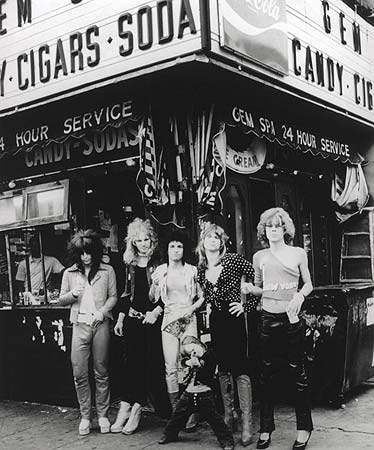
Such legit scenes were helped by an insularity that predated the availability of immediate information. You had to wait for Creem or Maximum or your fave zine to arrive. You had to depend on the knowledge of your friendly neighborhood record store owner. It was the heyday of the professional music critic and one’s trust in him became sacrosanct. In those days, band photos often carried the backdrop of the city from where they hailed. Place was actually important.

On my radio show, “Left Of The Dial” (every Monday from 3 to 5 on Grow Radio), I am exploring the concept of city scenes to see if the place itself helped define the sounds of its bands. I began with San Francisco and the Bay Area, which to my calculations had three scenes in its history that you could hear: the Hippy Era (1965-1972), Punk 1 (1978-1985), and Punk 2 (1990-present). This Monday, we’ll be looking at Detroit, a place with multiple, diverse, and often simultaneous scenes. If’n you’re interested, please “like” my Facebook group and join in on the listening thread during the show.

Muddy Britches (Slight Return)

Defeated last week, I came back to get to Cumberland Island or die trying. Buzzed by jetskiers, choked by diesel fumes, scraped by barnacles, scorched purple by the sun, and nearly felled by seasickness, I made it. ‘Twas the most strenuous slog I’ve ever done in a kayak: at one point the swells coming in from the Atlantic were so rough that I could feel my kayak surfing down the face of them–not an unpleasant sensation, but it’s tough to even tell you’re making headway in such conditions in this, my first interstate excursion.

Seasoned paddlers will tell you that islands look a LOT closer than they actually are on the water and I was not even sure I had made it until I felt the blessed sand under me as I finally ran aground on Cumberland. I could spend more than a blog post raving about what makes this island so special, but a mere 100-yard trod from the beach brought me inside a old-growth stand of live oaks and needle palms–a veritable godswood. I would have stayed there and napped if not for the dozens of mosquitos covering every inch of exposed flesh.

I was scorched and exhausted while I devoured my sandwich there on the beach, wondering how I would find the strength to get back, or what I would do if the gathering clouds above decided to become more serious. I decided to halve the return by stopping off by Fort Clinch and then made my way close to shore around the peninsula until I saw the sweet glow of my white truck and its serious AC waiting for me. As the weather cools later this fall, I plan to do a two- or three-day paddle around the island. I will include some sunscreen in the packing list when I do.

Whose Muddy Britches

After initial cleanup

Yesterday I attempted something I’ve wanted to do for 20 years: paddle to Cumberland Island in Georgia from St. Mary’s in Florida. I have spent many a day on Cumberland among the ruins, tourists, no-see-ums, and rattlesnakes, but I wanted to go without having to take the ferry. I knew it would be a vigorous paddle, but had no idea that the most dangerous leg of the journey would take place before I even hit water.

A quick drive along the shoreline in St. Mary’s revealed what looked to be a perfect launching spot next to a marina: parking (check), gradual decline from the sand to the water (check). So I took my boat toward what looked like sand and began to pull it toward the water. I immediately sank thigh deep into the thickest, blackest mud I’ve ever seen and lost both sandals. After retrieving them, I tossed them (useless to me) into the boat and tried it barefoot. My next step brought me chest deep and sinking…fast. Ah, so this is what quicksand is! Desperate now, my foot found purchase five feet down on submerged oyster beds that did what oyster beds do when you put your whole weight onto them: cut your feet to ribbons. Nevertheless, I had to push up against them to take my next step, which plunged me even deeper into the mud. Meanwhile, three fishermen from the marina were looking at me over their beers and safely from the patio hoping, I suppose, to see a death. With five inches to go until my mouth was under the mud, I decided now was the time to pull up on my kayak, which I did, bleeding and muddy beyond all imagining.

About a mile downriver, I found an oyster mound onshore and pulled off to wash up and reflect on just how close to drowning in mud I had been. No longer enthused about my original goal I paddled a while longer and headed back to the scene of my stupidity. The tide had mercifully come in and I was able to come ashore without touching the mud. I’ll try it again from somewhere else, I suppose, but damn that was scary. Lesson learned.

Elvis Presley, The Sun Sessions (1955)

Records That Changed Me

On August 16, 1977, I was climbing into the camper in my grandfather’s backyard when my Uncle Frankie told me that Elvis had died. He looked sad, so I tried to act sad too. In the days that followed, I learned more about the King than I ever cared to know: that he died on the toilet, that he gained weight in his later years, that Elvis impersonators existed. I never really got the whole Elvis thing, and still don’t. I can name, and make solid cases for, at least 5 artists or bands that were more important than Elvis.

So imagine my shock three years later when I heard “The Sun Sessions” for the first time. This was not the Elvis I thought I knew. This was pre-fame, hungry, raw, sex-soaked Elvis recording with two buddies in a room the size of my dining room. “The Sun Sessions” is rhythm stripped and reduced, concentrated and pure, the most physical music I have ever experienced: the relentless spanking of Bill Black’s stand-up bass, that mysterious double clicking throughout (it wasn’t the drummer, because they didn’t have one*), the criminally underrated Scotty Moore’s counterpoint guitar filling the cracks, and then Elvis, in full command, deconstructing language at the same time he is inventing a new one. Examples, you say? Go listen to what he does to the word “baby” on “Baby, Let’s Play House.” Or watch what happens to your body when he stops “Milkcow Blues Boogie” to say “let’s git reeeeal real gone for a change” and then proceeds to throw the whole shebang into overdrive. Or how nothing in real life or music feels more like a train than “Mystery Train.”

I made a pilgrimage to Sun Studios when I was in Memphis a few years back and stood in the spot Elvis did (well, the spot where Sam Phillips asked him to stand) when he recorded these songs. The experience did nothing to humanize or lessen the god-like awe I feel for what he did there. At that moment, I truly knew what “The King” meant. I care not a lick for anything Elvis did after he left the army, and that’s most of it. But “The Sun Sessions” makes up for all the wretched excess. If you’ve never heard it, I envy what you will experience if and when you do.

__________________

* There are drums on two tracks: “I’m Left, You’re Right, She’s Gone” and “I Forgot to Remember to Forget.”

And Then, Of Course, There’s Post-Punk

I swear I’m not using my blog to realize my thwarted desire to be a Music History professor, but when a listener last week suggested a “Post-Punk” show to bookend my “Proto-Punk” one, I figured I might need to do some explaining before I hit the airwaves–if for no other reason than to figure out what it means myself.

First of all, Post-Punk is a critic’s invention (thanks, Greil!) and quickly became a way to lump the tidal wave of bands inspired by punk, but who didn’t necessarily sound punk. And it came quickly: if punks hits in 1976, post-punk arrives less than a year later. Most folks preferred to call all of it “New Wave” (a term I despised from the git-go) but that is a misnomer. Although there is some overlap, New Wave was its own style of music, and anything that wasn’t Journey or Genesis or Molly Hatchet and had a synthesizer was called New Wave by the masses. For instance, I was almost fired from a job waiting tables in 1983 for shaving my head up to the crown because the manager said I looked too “New Wave” and was “scaring the customers.”

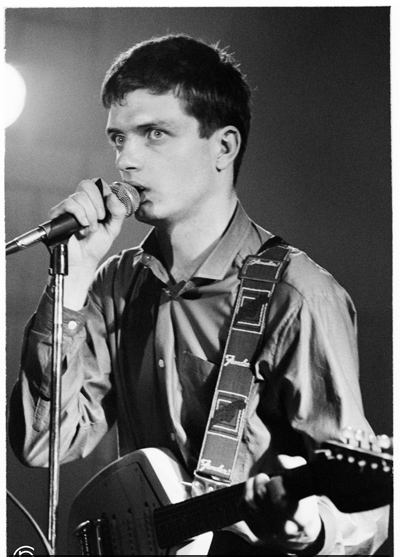
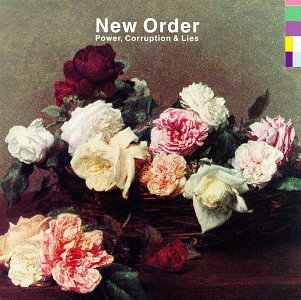
So what is it then? Well, it’s mostly British, often bleak (but melodic), and hit listeners like a sledgehammer. We’d been prepared for punk by a generation of 3-chord rock and roll, but nothing prepared us for bands like Joy Division, Gang Of Four, and Pere Ubu–unless, of course, you happened to grow up in West Berlin and suckled at the teat of Kraftwerk and Neu! I remember actually being scared by some of this stuff. Post-Punk? More like Post-Apocalypse. But I also remember never feeling so free as when I dropped the needle on a New Order record for the first time, knowing that no one else in Virginia Beach (besides Chris Bonney) was listening to them.

Some of it doesn’t sound as shocking as it did then, but some of it sounds even more so.  Tune in to “Left Of The Dial” on Grow Radio this Monday from 3 to 5.